中文
中文 English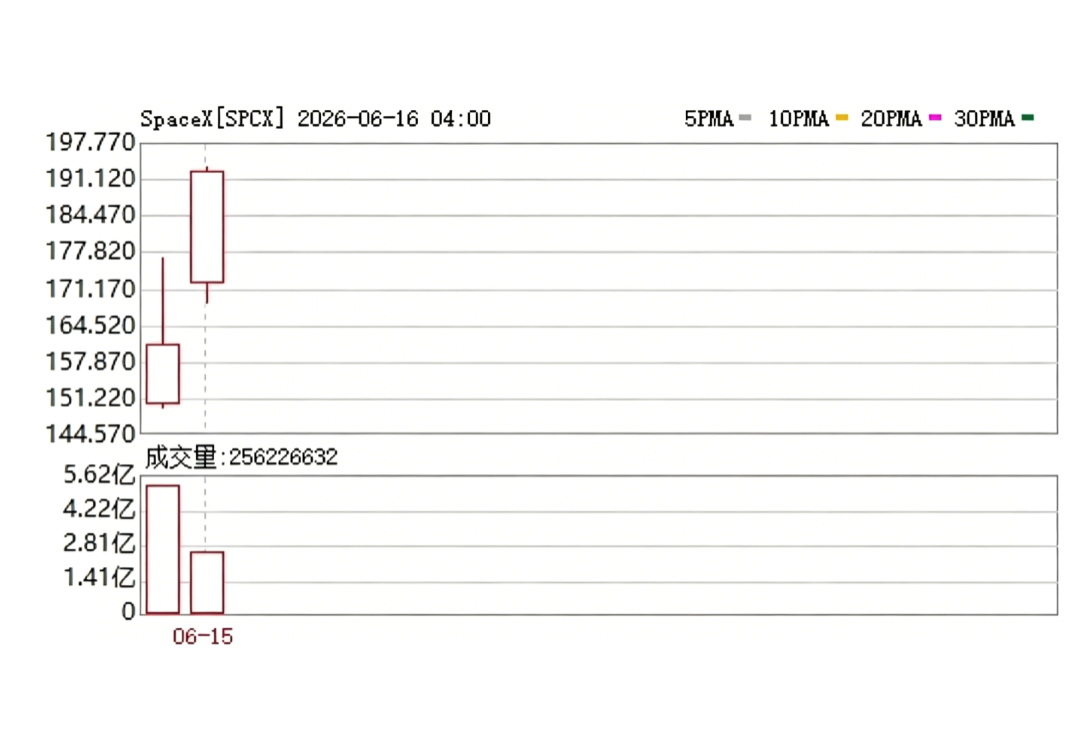
SpaceX Soars After IPO: Musk’s Wealth Hits New High, How to Value a Trillion-Dollar Empire?
Keywords: SpaceX, Elon Musk, IPO, greenshoe option, valuation debate, capital markets
Introduction
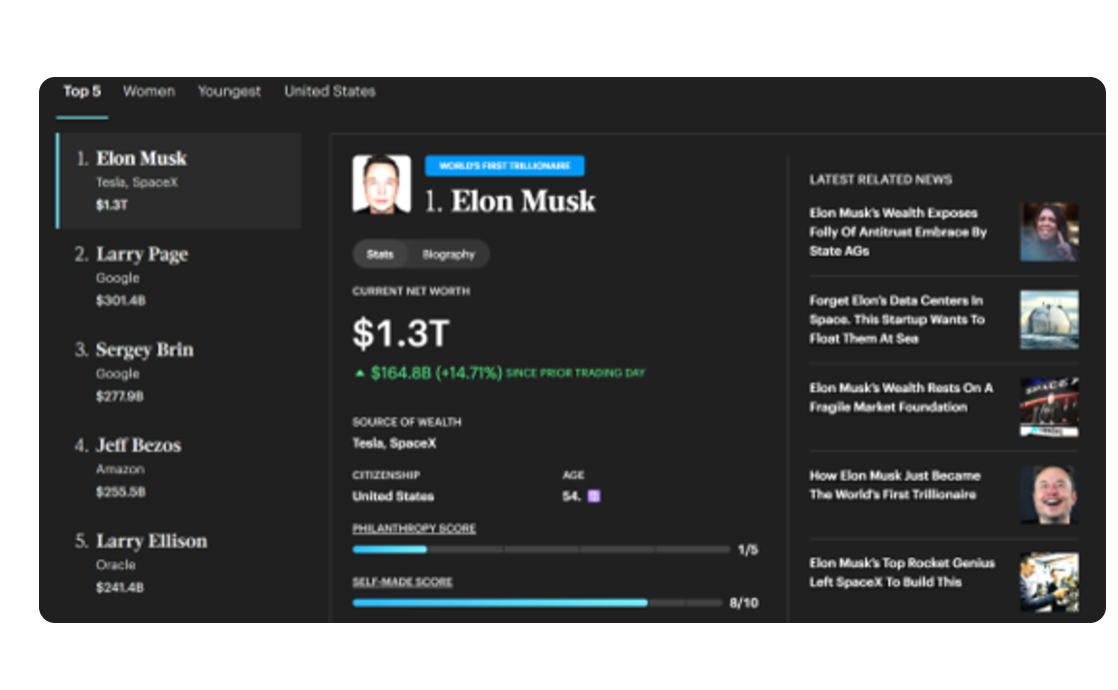
In capital markets, few names generate as much impact as Elon Musk. On Monday, SpaceX, Musk’s rocket, satellite, and AI company, continued its strong performance on the second trading day after listing, surging over 19.6% to close at $192.5, further fueling market attention. Meanwhile, Musk‘s personal wealth hit another record, increasing by $164.8 billion in one day to around $1.3 trillion, making him the most dazzling figure in global wealth.
This is not just a stock rally but a deep game over tech valuation, capital preferences, and business future. SpaceX’s IPO is pushing “commercial space” from long-term narrative to current trading, while Musk‘s wealth myth is amplified.
1. Behind the Surge: Capital Betting on “Future”
SpaceX’s continuous rise after IPO is not entirely surprising. As the world‘s most representative commercial space company, SpaceX has surpassed traditional aerospace definitions. Its rocket launches, satellite internet, and AI-related deployments form a business loop with immense imagination. Capital markets price such firms not on short-term profits but on expectations of future monopoly, scale effects, and ecosystem value.
With the stock rising sharply on day one and continuing on day two, market enthusiasm far exceeded expectations. On Friday, the company listed on Nasdaq at $135 per share with 555.56 million shares, attracting over $350 billion in subscriptions, with strong demand from both institutions and retail. Such huge subscription indicates investors are not just buying a stock but a future vision of the “space economy.”
From a market perspective, this heat reflects continued capital preference for tech leaders. Even amid macro uncertainty, as long as the firm has strong technical barriers, brand appeal, and long-term growth story, capital is willing to pay high premiums.
2. Greenshoe Amplifies IPO Heat
SpaceX announced Monday that underwriters exercised the IPO greenshoe overallotment option, raising total proceeds from $75 billion to $85.7 billion. The additional 83.3 million shares directly confirmed strong investor demand.
The greenshoe mechanism essentially allows underwriters to sell additional shares when market response is strong, to stabilize prices and meet excess demand. Typically, when a newly listed stock performs strongly, underwriters exercise this right to expand the offering. This huge overallotment nearly broke historical records for tech IPOs, showing this is not just a fundraise but a concentrated release of market sentiment.
Notably, on Friday, SpaceX employees wore green ties to honor the “greenshoe option,” and Musk later reposted the photo on X. This detail seems lighthearted but reflects Musk’s style: he turns capital events into conversation, then amplifies to brand events. For a company in rapid expansion, this linkage between sentiment and capital often strengthens market expectations.
3. Musk Wealth Soars: Personal Legend and Capital Myth Intertwined
SpaceX‘s price increase ultimately maps to Musk’s staggering wealth. Based on his holding of 4.8 billion shares plus 350 million stock options with an exercise price of $8.40 per share, his stake is about 38%. As the stock rises, his paper wealth balloons.
On Monday, Musk‘s net worth increased by $164.8 billion in one day, a figure exceeding the entire fortune of the world’s tenth richest, Warren Buffett. More strikingly, the wealth gap between Musk and second-ranked Larry Page has grown to about $1 trillion. Such a wealth chasm is extremely rare in global business history.
From a longer perspective, Musk’s wealth growth is almost a continuous record-breaking saga. In October last year, he became the first with $500 billion; by December, $600 billion; four days later, $700 billion. Now at $1.3 trillion, he is not just the richest person but a super symbol capable of influencing capital market sentiment, tech investment direction, and public perception.
4. High Revenue Growth vs. Widening Loss: Real Pressure Beneath Boom
However, market enthusiasm does not mean fundamental pressures have vanished. According to disclosures, SpaceX‘s 2025 revenue grew from $14.02 billion to $18.67 billion, impressive, but the company swung from a $791 million profit to a net loss of $4.94 billion.
These figures are crucial. They indicate SpaceX is in a typical high-investment expansion phase: revenue growth does not equal profit realization; scale expansion does not mean cash flow safety. Rockets, satellite constellations, R&D, manufacturing capacity, and ground infrastructure are all capital-intensive, any of which can consume huge cash.
Thus, it’s unsurprising that market opinions on valuation diverge. For bulls, losses are just a phase of expansion; for bears, huge valuations have overdrawn too much future growth. The core difference lies in judgment on whether commercial space can form a stable profit model.
5. Wall Street Divides: Can High Valuation Hold?
After SpaceX‘s IPO, some Wall Street institutions quickly expressed caution. CFRA initiated coverage on Friday with a “sell” rating and a 12-month target of $115, about 40% below the latest close. Their main reasons include aggressive growth strategy, excessive valuation expectations, and high capital intensity.
This view is not merely bearish but a reminder of valuation reality. Current pricing of tech newcomers often assumes “unassailable future for years,” but the real business world is more complex. SpaceX, despite huge technical and brand advantages, still faces challenges in regulation, supply chain, launch safety, international competition, and rising capex.
In other words, SpaceX is not without prospects, but whether its prospects justify the current market cap needs time to verify. For investors, the real question is not “is this company great?” but “has greatness been overpriced?”
Conclusion
SpaceX’s IPO debut and subsequent surge is both another amplification of Musk‘s personal legend and a concentrated bet by capital on future tech imagination. The greenshoe exercise, oversubscription, continuous stock rise, and Musk’s new wealth record together form a highly dramatic capital picture.
But the louder the noise, the more rational one must be. SpaceX‘s growth story is undoubtedly attractive long-term, but the contradiction between high valuation and high investment cannot be ignored. In the future, what determines whether the company can truly secure a trillion-dollar platform is not just capital market enthusiasm but its ability to consistently deliver revenue growth, control loss expansion, and establish a solid profit model.
For Musk, wealth exceeding $1.3 trillion is just a stage node; for markets, SpaceX’s IPO may be just beginning. The real test is not whether it can amaze for a moment but whether it can turn myth into sustainable business reality.