中文
中文 English
 <\/div><\/div>
Alright, below is a professionally written article created based on the reference content and requirements you provided.<\/p>\n
\n
Precious Metals Market Under Pressure: Analyzing the Logic Behind the Joint Decline of Gold and Silver<\/h3>\n
Abstract:<\/strong>\nRecently, the global precious metals market has shown a significant adjustment trend. According to the latest market data, spot gold prices have fallen short-term, breaking below the integer level of $4,000 per ounce, with intraday losses narrowing to 0.1%; simultaneously, spot silver prices have also declined, dropping 0.35% to trade at $57.42 per ounce. This movement has triggered widespread market attention and deep reflection. This article will analyze this phenomenon from multiple dimensions including macroeconomic background, monetary policy expectations, commodity linkage effects, and market sentiment, exploring the deeper market logic behind it.<\/p>\n For financial markets, integer levels are not only technical chart support or resistance points but also carry the psychological expectations and investment sentiment of market participants. Spot gold's decline below the $4,000 mark should be a symbolic event. However, given the current complex global macro environment, this price change is not an isolated emotional sell-off but may be an orderly adjustment driven by multiple structural factors. Meanwhile, silver, often called the "poor man's gold," has seen even more significant declines, further confirming the weakening trend in overall precious metals demand.<\/p>\n As globally recognized safe-haven and inflation-hedging assets, the pricing logic of precious metals is deeply influenced by real interest rates and the US dollar trend. The core challenge currently facing the market is that deepening deglobalization and fiscal discipline constraints in major economies have not completely reversed the high-interest rate environment's attraction to risk assets.<\/p>\n 1. The "Siphon Effect" of a High US Dollar Index<\/strong>\nAlthough market expectations for Federal Reserve rate cuts fluctuate, the relative resilience of US economic data keeps the US dollar index oscillating at high levels. A strong dollar means precious metals priced in dollars become less attractive to holders of other currencies. When investors can obtain higher risk-free or low-risk returns by holding dollars, the demand for non-yielding assets like gold naturally diminishes. Breaking below the $4,000 level is a direct manifestation of this strong-dollar logic reshaping precious metals valuations.<\/p>\n 2. "Opportunity Cost" Pressure Under High Real Interest Rates<\/strong>\nIf nominal interest rate declines fail to outpace the pace of inflation reduction, real interest rates remain high. Real interest rates are a long-term core negatively correlated factor for gold prices. When real interest rates are high, the opportunity cost of holding gold increases significantly. Investors tend to allocate funds to bonds or stocks that generate interest or dividends, rather than high-cost storage gold. This "crowding-out effect" in asset allocation is the core factor weakening gold buying power.<\/p>\n 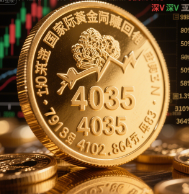\nFigure Note: The technical game around the key integer level for gold reflects the intense battle between market bulls and bears.<\/em><\/p>\n Compared to gold, silver typically exhibits greater volatility. Its recent decline following gold, with sharper losses, reflects a pessimistic market outlook for its industrial demand.<\/p>\n 1. Industrial Pressure: A "Late Spring Chill" in Global Manufacturing Recovery<\/strong>\nSilver plays a crucial role in high-tech industries such as photovoltaics, electronics, and new energy vehicles. However, after the initial post-pandemic revenge rebound, global economic activity is entering a period of weak demand. Manufacturing PMI data in major economies struggles around the boom-bust line, directly undermining silver's physical consumption prospects. When market expectations for industrial growth are pessimistic, silver faces more direct and severe downward pressure than gold, which is purely a safe-haven asset.<\/p>\n 2. Financial Attribute Correction: The Matthew Effect of Safe-Haven Capital Outflows<\/strong>\nIn terms of financial attributes, silver is highly dependent on gold's lead. When gold, the "flagship," breaks below a key support level, silver often experiences a more significant catch-down. Capital fleeing from higher-risk silver assets in high-ranges toward relatively safer assets leads to a sharp contraction in silver market liquidity. The current quote of $57.42 per ounce is the inevitable result of this dual pressure from "financial driving forces" and "industrial drag."<\/p>\n Beyond fundamental logic, changes in market sentiment and positioning structures cannot be ignored.<\/p>\n 1. "Stop-Loss Wave" of Long Positions and Market Confidence Reshaping<\/strong>\nBreaking below the $4,000 mark typically triggers automatic stop-losses for a large number of futures long positions, further exacerbating selling pressure and forming a so-called "technical stampede." On the COMEX gold futures market, a significant reduction in non-commercial net long positions reflects a shift in speculative capital sentiment from optimism to caution or even pessimism regarding short-term prospects.<\/p>\n 2. Divergence Between Physical Demand and Speculative Demand<\/strong>\nAlthough central bank gold purchases as long-term strategic behavior build a fundamental support for gold prices at the macro level, short-term speculative demand and ETF holdings changes have a more direct impact on price volatility. When speculative capital exits due to improved macro risk appetite, even if central banks are quietly "stocking up," it is difficult to stop prices from sliding at the margin. This decline is a partial reflection of the imbalance between speculative capital and physical demand.<\/p>\n 1. Short-term Risk: Cautious Approach, Waiting for Signals<\/strong>\nLooking ahead in the short term, the precious metals market will continue to face sustained pressure from a strong dollar and high real interest rates. After losing the $4,000 mark, this level may transform from support into new resistance. Without a clear macro policy shift (e.g., an unexpected Fed rate cut) or a sharp escalation in geopolitical risks, gold and silver prices will likely maintain rang-bound trading at lower levels, and may even continue to seek new support.<\/p>\n 2. Long-term Support: A Golden Window for Bottom-Fishing<\/strong>\nHowever, from a long-cycle value investing perspective, every irrational panic decline often presents an opportunity to build positions in quality assets. The long-term trend of global debt monetization is hard to reverse, and the restructuring of the decentralized international monetary system will serve as the cornerstone supporting gold's long-term value. Meanwhile, silver's role in the energy transition means its long-term supply-demand gap logic still exists.<\/p>\n For investors, the current market conditions should be viewed as a rational stress test.First, be cautious about short-selling risk<\/strong>: markets often see technical rebounds after rapid declines.Second, focus on core variables<\/strong>: pay close attention to the upcoming Fed meeting statements, changes in US CPI and PCE price indices, and the latest central bank gold purchase trends. When real interest rate expectations show signs of peaking and turning down, that is the opportune moment to allocate precious metals.<\/p>\n In summary, gold's fall below $4,000 and silver's decline are not apocalyptic signs but an orderly adjustment in the global financial market as it shifts between macro cycles. Amid the tidal fluctuations, maintaining a calm mind and a long-term perspective is the fundamental principle for navigating cycles and achieving steady profits.<\/p>Introduction: The Gain and Loss at the Integer Level<\/h3>\n
I. Core Suppression: "Cooking Without Water" Under the Global Tightening Cycle<\/h3>\n
II. Silver's "Dual Nature": Co-downward Resonance of Industrial Demand and Financial Attributes<\/h3>\n
III. Market Sentiment and Technical Analysis<\/h3>\n
Conclusion: Despite the Gloom, There Is Also a Silver Lining<\/h3>\n